
Ice Hockey Betting Tips 2026: Reading Value Behind the Odds
 Available in US
Searches for “ice hockey betting tips” tend to land on a tip sheet. A list of picks is what a tipster sells, and a tip sheet is what those searches expect. This page is the other side of that trade. A tip is the final step of a process that begins with the bookmaker’s margin and ends with the punter’s stake, and every step in between — the form check, the line-up read, the price comparison, the staking plan — decides whether the tip is worth following at all. A tip that ignores those steps is a guess dressed as analysis; a tip that honours them is a value bet, and the value lives in the gap between the true probability and the price the bookmaker is offering.

What follows is a working tour of that process for the British punter, anchored in ice hockey. The sport brings its own traps — overtime rules, three-way lines, the small margins on match-winner markets — and the British market brings its own frame: a Gambling Commission licence, GAMSTOP, the bonus cap that landed in January 2026, and a 25% remote betting duty that takes effect on 1 April 2027. Current as of October 30, 2026 and checked against the Gambling Commission’s public register of remote operating licences.
Ice Hockey Betting on a Mobile and Through an App
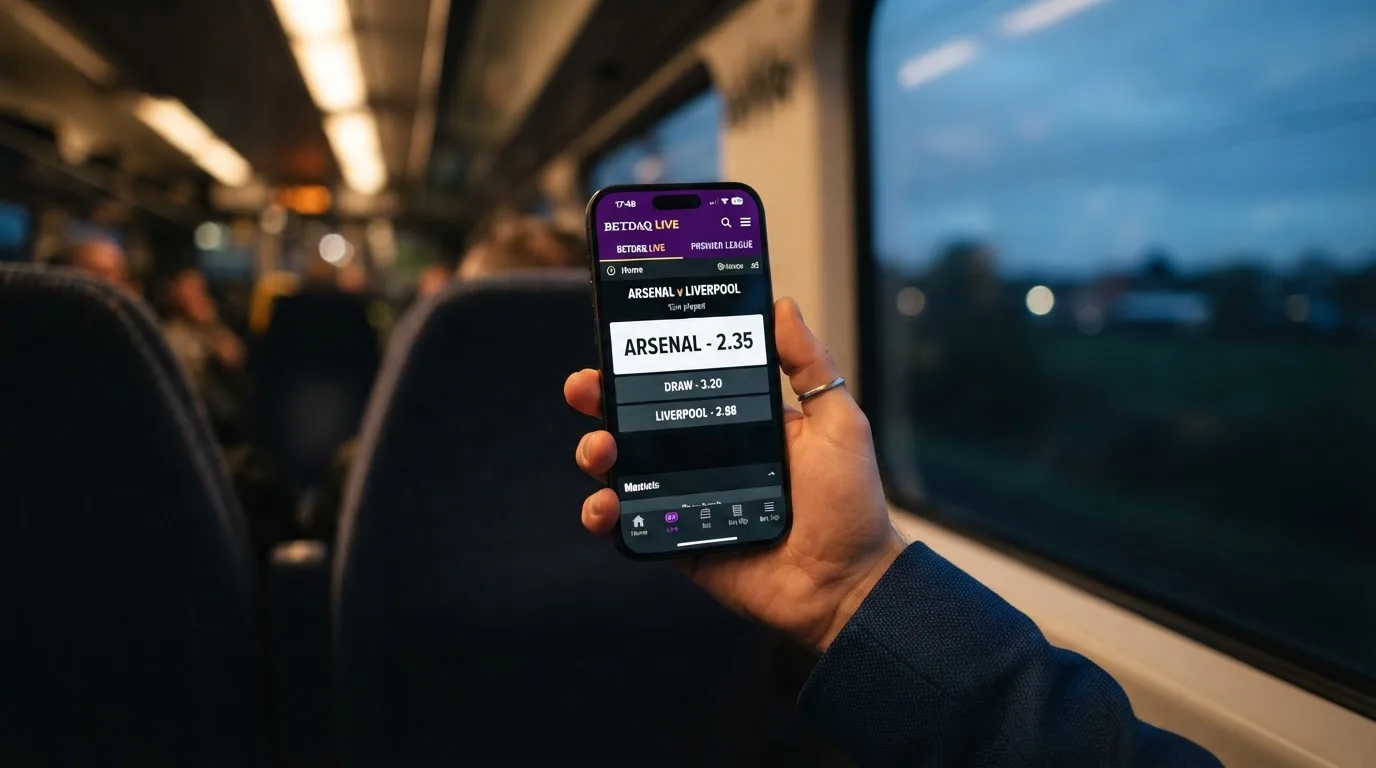
Ice hockey is a fast sport, and the prices move with the puck. The handicap on a second-period goal, the total at 4.5, the next-goal scorer market — all of them can change between a face-off and the whistle. A punter who only takes prices on a desktop in the evening misses the game as it is being played, and most of the value in NHL puck lines and in-play totals is in the first three periods, not the closing number on the morning of the game. That is the reason a phone is the default tool for this market, not a luxury.

What a punter is actually choosing between is a native app downloaded from the App Store or Google Play, a mobile site reached through the phone’s browser, and a hybrid of the two. Native apps carry push notifications, biometric login, the in-play page pre-loaded, and a saved bet slip. A mobile browser version is more flexible — it does not eat phone storage, it survives a software update, and the punter can use it on a phone that does not belong to them. A serious in-play bettor usually ends up with the native app for the live markets and the browser for the occasional price check, because each does one job better than the other.
The trade-off is data. A live match tracker, the kind that updates the shot count and the on-ice events as they happen, costs bandwidth, and on a flaky mobile network the page will stutter just as the bookmaker is updating the price. Native apps handle this by caching the betting slip and refreshing the price only when the user taps. Browser versions are usually lighter, but they can lose a connection at the worst possible time. The honest comparison is that a punter who bets primarily in play should pick the platform that has the most reliable connection at the rink they actually bet from, which is usually the sofa and not the train.
Two features sit above the platform choice. A bet builder is the first: it lets a punter combine selections from one match — first-period total, match result, player shots on goal — into a single price. The second is cash out, which closes a bet before the final whistle. Both features are best judged by the small print. A bet builder that excludes the most popular selections, or a cash out that suspends during power plays, is not the same product as one that does not, even when the marketing page reads identically. The punter should check both on a small stake before trusting either with anything serious.
Live Betting, In-Play Markets and Cash Out on Ice Hockey
Ice hockey is a sport of momentum shifts, and a 1-0 third period looks very different after a power-play goal. Live betting is where the bookmaker’s traders are busiest and where the punter who knows the sport can read a swing the price has not caught up with. The market on offer runs the usual menu: match result with the draw priced separately, the three-way line where overtime is included, next goal, period totals, and player props on shots and points. The shape of the menu depends on the bookmaker. The bigger the brand, the more lines per game; the smaller the brand, the more concentrated the menu on match result and total.

A price offered in play has two extra layers of cost that a pre-match price does not. The first is the in-play margin, which is wider than the pre-match margin because the bookmaker has less time to balance the book. The second is the suspension, the few seconds during which a goal is being confirmed and the bookmaker is taking no bets. A punter who tries to chase a price across two bookmakers during a suspension is the punter who watches the goal go in and the bet stay uncounted. The honest assessment is that in-play is a tool for the punter who already has a read on the game, not a substitute for one.
Cash out is the second live feature and the more expensive one in the long run. The bookmaker quotes a price that closes the bet before the final whistle. The price is built from the current state of the bet and the bookmaker’s own in-play margin, and it is rarely generous. A punter who cashes out a winning bet early is paying a premium for the certainty of locking in a profit, and a punter who cashes out a losing bet is paying for the privilege of cutting the loss. Either way, the bookmaker keeps the difference. Cash out is worth using when a punter genuinely has new information — a confirmed starter pulled from the warm-up, a netminder pulled for the third — and worth avoiding when it is just a hedge against nerves.
The third live feature is the live stream. A bookmaker that streams an NHL game on the same page that takes the bets is offering a real edge: a punter can watch the power play form before laying a stake on the next-goal market. A bookmaker that only shows a tracker — shots, possession, face-offs — gives less. A bookmaker that offers neither leaves the punter watching the game elsewhere and clicking back to the bet, which is how suspensions get missed. The mid-tier brands usually do one of the three, and the choice between a stream, a tracker or neither is one a serious in-play bettor should make before the season starts.
Building a Prediction: Form, Statistics and the Puck Line
A tip is the output of a process. The process has four steps: the form read, the match-up read, the price read, and the stake read. A punter who skips any of the four is paying for a guess.

The form read is the simplest. A team on a five-game winning streak and a team on a five-game losing streak meet, and the price does not always reflect the gap. The streak is the headline; the supporting numbers are the away record, the last ten, the goals for and against in third periods, the power play percentage over the same window. None of those numbers is, on its own, a reason to back a team. Together they are a check on whether the public price is being driven by one narrative, and the read is complete when the punter can name two or three factors that the public price has not absorbed.
The match-up read is the layer that turns a streak into a number. A team that scores four a game against weak defences will not score four a game against a tight defensive pair and a top goaltender. A team on a road trip that has played four away games in six nights will not be as fresh as their record suggests. A team that has lost its starting goaltender to injury the day before the game is a different team from the one the price is set on. The match-up read is where the tip begins to differ from the public line, and it is also where the punter’s information advantage or disadvantage shows up. A punter with no live stream, no injury feed, and no first-hand knowledge of the rosters has no edge in the match-up read, and should not pretend otherwise.
The price read is the layer that turns the difference into a value bet. The bookmaker’s price is the market’s view of the probability, plus the margin. The punter’s job is to compare the two. If the punter’s read of the match gives a team a 60% chance of winning, and the price implies 50% (decimal odds of 2.00), the bet has value. If the punter’s read gives 50% and the price implies 50%, the bet is at best a coin-flip, and at worst a losing one once the margin is taken out. The number that does the work is the implied probability — the inverse of the decimal odds — and a tip with no implied probability attached is not a value bet, it is a hope.
The stake read is the final layer, and the one most often skipped. A stake of 2% of the bank on a value bet, 1% on a marginal one, and 0% on a coin-flip is the standard staking plan, and the difference between a value bettor and a tip-sheet follower is the difference between a plan and a feeling. A punter who stakes 10% of the bank because the tip “feels right” is no longer betting, they are gambling. The plan does not have to be elaborate. It has to be written down, and it has to be the same plan across a hundred bets, not a new one each week.
The arithmetic that ties those four reads together is the margin. The bookmaker builds a margin into every market, and the margin is the difference between the true probability of the outcomes and the probabilities the prices imply. A market with a 5% margin is a market where, on average across every bet placed, the bookmaker keeps 5 pence of every pound staked. A market with an 8% margin is more expensive. A market with a 12% margin is one a serious punter walks past. The margin is invisible on the betting slip, and that is its function. A punter who knows how to read it has an edge that does not depend on knowing who will win.
Ice Hockey Bet Types and How the Odds Are Built
A betting slip on an ice hockey game is longer than a slip on a football game, because the sport carries more markets and each of them prices differently. The most common are: match result (home, draw, away, with overtime included as a separate market), the three-way line, the puck line (a handicap of plus or minus 1.5 goals), the total (over or under a set number of goals, usually 5.5 or 6.5), period betting (first period, second period, third period totals), player props (points, shots, saves), and the bet builder that ties several of these into one. Each carries a different margin.

The match result market with overtime included is a two-way market — home or away, no draw. The decimal odds on such a market are usually close to 1.90 each way on a competitive game, and the implied probabilities add up to a number just over 1.00. A worked example: an illustrative market at decimal odds of 1.90 on each side gives an implied probability of 1/1.90, or about 52.63% on each outcome. Two outcomes at 52.63% each give a total implied probability of 105.26%. The overround is 5.26%, and the margin — calculated as (1.0526 − 1) / 1.0526 — is 5.0%. The punter’s payout share is 95.0%. Stated as a band rather than a single figure: the margin on a competitive two-way ice hockey market typically lands between 3% and 7%, and the lower end is where the value is.
The three-way market — home, draw, away — is a more expensive market for the punter, because the draw is harder to price and the margin tends to sit 2 to 3 percentage points higher. The total and the puck line are usually priced tightly, because the bookmaker has good data on scoring rates and a closing line that is hard to beat. Player props are the wild card: the bookmaker has less data on a backup defenceman’s shot rate than on a team’s average goals, and the margin on a niche player prop can be 10% or more. The honest read is that the smaller the market, the higher the margin, and the more carefully a punter should read the implied probability.
The bet builder is the place where the punter has to be most careful. A bet builder combines several selections into one price, and the price is built by multiplying the implied probabilities of each leg and then applying a margin on top of the combined price. The result is a price that is almost always worse than the price of placing each leg as a separate bet, and the gap is the bet builder’s fee. A punter who uses a bet builder for the convenience is paying for that convenience in lost margin. A punter who uses it because they have a read on the combination — “the home team scores first, the total goes over, and the favourite defenceman gets a point” — is paying the fee for a bet that no single market offers.
The each-way bet deserves a separate note because ice hockey is a sport where it is offered on tournament and season-long markets rather than single games. An each-way bet is two bets of equal stake, one on the win and one on the place, and the stake doubles. The place terms vary: a field of eight runners usually pays a quarter of the win odds for the place, a field of four usually pays a fifth. A punter who lays an each-way stake on a season-long market should check the place terms before clicking, because a 1/4 place and a 1/5 place make a real difference to the return at the end of a 1,000-point season.
Sports and Tournaments: Where the Ice Hockey Calendar Sits
The ice hockey calendar is shaped by the NHL, and the NHL is shaped by its season. The 2026–27 NHL season starts on 29 September 2026 with 32 teams playing 84 games each, up from 82, and the regular season ends on 10 April 2027. The Stanley Cup playoffs follow, and the 2026 Stanley Cup Final was won by the Carolina Hurricanes, who beat the Vegas Golden Knights. That is the most-watched league, the most-priced league, and the league that drives the most margin on the British bookmaker’s puck-line market.

The second tier is the international game. The IIHF is the highest governing body of ice hockey, and the IIHF World Championship runs every spring, with the 3-on-3 overtime format in place since 2019. The Olympic tournament sits beside it: men’s ice hockey has been part of the Winter Olympics since 1924, and women’s ice hockey was added in 1998. The Olympic gold medal game uses 3-on-3 overtime, the same format as the World Championship. A British punter betting on the international game should know the rule: a tied game goes to overtime in both leagues, and the 3-on-3 format produces more decisive results in the regular season than the old five-minute format did.
The third tier is the domestic European game, which is where the British punter with a feel for the KHL, the SHL, the Liiga and the DEL finds the value. The domestic leagues run during the European winter, and the prices on a mid-week KHL game tend to be looser than the prices on a Saturday NHL game, because the bookmaker has fewer data points and a thinner trading team. The looser price is the value, and the punter who knows the European game has an edge in that window. The same is true of the Champions Hockey League, which runs from September to February and offers a tournament-long market on a winner that the British bookmaker prices less accurately than the NHL.
The fourth tier is the lower British and North American leagues — the EIHL, the AHL, the junior leagues — which the bookmakers cover thinly. A bookmaker that offers a single line on an EIHL game is usually offering it at a wider margin than the same bookmaker’s NHL line, and the punter who treats the EIHL price as if it were an NHL price is paying for the privilege.
The structure of an ice hockey game itself shapes the markets. A professional game has three periods of twenty minutes, with each side fielding six players including one goaltender. Tied games go to overtime, and the NHL regular season follows overtime with a penalty shootout, while the IIHF World Championship and the Olympic gold medal game use 3-on-3 overtime. A punter who backs the draw on a three-way line in the NHL is betting on a result that does not exist, because the NHL does not draw. The three-way line on an NHL game includes overtime; the three-way line on a Champions Hockey League game does not, unless the bookmaker says so. The small print on the market definition is the difference between a winning bet and an empty slip.
The Ten Bookmakers: A Landscape View
The comparison below is built from the Gambling Commission’s public register of remote operating licences and from each operator’s own published terms. The licence is the floor, not the ceiling: a brand that holds a GB licence has met the regulator’s checks, and the differences between brands sit on top of that floor. A punter comparing the ten should read the licence first, the platform second, and the welcome terms last, because a generous offer on a poorly-built in-play page is not generous in the second week of the season.
| Brand | Gambling Commission remote licence number and licence holder | What the operator’s own terms state on the key’s subject |
|---|---|---|
| VBet | 044662-R-324273-022, held by SCGO Limited | The Vbet app offers Bet Builder, pre-match and in-play betting, live streaming, and a live calendar with results and stats |
| Coral | 054743-R-330863-014, held by LC International Limited | The sports welcome offer is “Get £40 in Free Bets when you bet £20”: a £20+ deposit and sports bet at minimum odds of 2.0 (1/1), with £40 in free bets issued within 7 days and expiring 7 days after issue |
| Fafabet | 057385-R-333191-006, held by Taichi Tech Limited | Pays Best Odds Guaranteed on UK and Irish horse racing win and each-way bets from 9am on race days: if the starting price is bigger than the original price, the bigger odds are paid |
| Octobet | 062545-R-337248-006, held by Octopus Game Limited | Offers Best Odds Guaranteed on UK and Irish horse racing, up to £150 per customer per race |
| Betfred | 039544-R-319290-010, held by Petfre (Gibraltar) Limited | The app features Bet Builder, Sub Switch, Racing Post data, Extra Places, live casino and bingo |
| Dabble | 065677-R-340363-005, held by Dabble Sports UK Ltd | Welcome offer is “Bet £10, Get £10 in Free Bets” on a first deposit, with minimum odds applying, a 7-day free bet expiry and the stake not returned |
| Lottoland | 038991-R-319408-020, held by EU Lotto Limited | Combines casino, lottery betting, sports betting and scratchcards, and is licensed by the Gambling Commission for customers in Great Britain |
| Paddy Power | 039439-R-319330-013, held by PPB Counterparty Services Limited | The app offers Bet Builder+, Popular Bet Builders, Super Sub, expanded Win More markets, and player and ACCA stats |
| Sky Bet | 067370-R-341330-005, held by SBG Sports Limited | The welcome offer is £30 in free bets, credited as three £10 free bet tokens after a £5+ deposit and a first single or each-way bet of at least 5p at odds of 1/1 or greater |
| Tote | 054779-R-331321-008, held by TDCO Limited | Pays Best Odds Guaranteed on UK and Irish horse racing from 8 AM on the day of the race, on single and multiple bets; does not apply to ante-post, tote or pari-mutuel bets |
A few things stand out from the table once it is read as a comparison rather than a list. The first is that Best Odds Guaranteed is a horse-racing concession, not an ice hockey one, and four of the ten brands offer it. A punter who bets on ice hockey only is paying for a feature they do not use; a punter who bets on both sports gets something for nothing on the racing side. The second is the spread of welcome offers, which range from a £10 free bet on a £10 deposit (Dabble) to a £40 free bet on a £20 bet (Coral), and a £30 free bet token bundle on a 5p bet (Sky Bet). The stake-not-returned clause on the free bet is the consistent feature across the table, and the 7-day expiry is the consistent cost. The third is that two of the brands — Paddy Power and VBet — have built their apps around bet builders and live streaming, while one — Betfred — has built theirs around Racing Post data and Extra Places. The punter who bets primarily in play should weight the first pair; the punter who bets primarily on the form book should weight the second.
What the table cannot show is the order in which the brands price the same market. Two bookmakers with a 5% margin on a match-winner line will give the punter the same value, but a bookmaker with a 4.5% margin is the better one to hold an account with, all else equal. Comparing the closing line on the same game across three or four bookmakers over a month is the only way to see that difference, and the table is the start of the comparison, not the end.
Ice Hockey Betting in the UK: The Legal Frame
A bookmaker serving customers in Great Britain needs a Gambling Commission licence, and the licence is the regulator’s permission to take bets from a British customer. The Gambling Commission is a non-departmental public body sponsored by the Department for Culture, Media and Sport, and it operates under the Gambling Act 2005, which covers England, Scotland and Wales. Northern Ireland sits outside the Act, and a GB licence does not regulate Northern Ireland — that distinction matters, and “GB-licensed” is the right phrase.

Since the Gambling (Licensing and Advertising) Act 2014 an operator whose remote facilities are used in Great Britain needs a Commission licence wherever it is based, so a Curaçao, Maltese or Gibraltar licence is not a substitute. The ten brands in the comparison each hold a remote general betting standard (real events) licence, which is the category that covers pre-match and in-play sports betting. Some also hold a remote betting intermediary licence, which is the exchange category; some hold additional categories for casino, bingo and pool betting. The public register can be searched by business name, trading name, domain or account number, and it is the whole test of whether a brand holds a licence. The register is the first place a punter should look before opening an account, and the last place they should look before depositing a serious stake.
The minimum age for betting in Great Britain is 18, and the operator verifies the customer’s name, address and date of birth before the first deposit. A free bet or a bonus is still a bet, and the same verification applies. The verification is a one-time process for most customers, and it is the reason no GB-licensed site offers anonymous play. The trade-off is clear: a verified account is a protected account, and the protection runs through GAMSTOP, the Commission’s complaints route, and an approved dispute-resolution body.
A licensed operator’s licence category is not the same as the markets it offers. There is no statutory list of permitted bets in British law: a licence holder offers markets under the Licence Conditions and Codes of Practice (LCCP), and the LCCP gives the operator wide discretion over what it takes bets on. Esports are treated like any other event; virtual events are a separate licence category; bets on politics, TV shows and novelty markets are offered by GB bookmakers, and no statutory prohibition was found. In-play betting is offered by GB bookmakers, and the controls are the operator’s licence conditions, not a statutory rule. The honest framing is that a GB licence is a permission to operate within a frame, and the frame gives the operator room to build the menu it wants.
Spread betting sits beside fixed-odds betting as a separate market. Spreadex is regulated by the FCA for spread betting and by the Gambling Commission for fixed-odds betting, and the FCA-regulated side carries a specific warning: spread betting losses can exceed the deposit. That is the structural feature of spread betting, and it is why the FCA, not the Commission, regulates it. A punter who reads “spread” on an ice hockey market should know which regulator is on the other side of the bet.
Responsible Gambling Tools and Where to Get Help
The British framework is built on safer gambling, and the licensed bookmakers are required to provide the tools that go with it. The set runs through four names: GAMSTOP, the multi-operator self-exclusion scheme; the financial vulnerability check; the deposit limit; and the responsible gambling organisations that take the calls when the tools are not enough.
GAMSTOP is the national self-exclusion scheme, and it has been a mandatory licence condition for online operators since 31 March 2020. A punter who signs up to GAMSTOP is excluded from every GB-licensed online operator for a period they choose — six months, one year, five years, or five years with auto-renewal — and after the minimum period the exclusion stays in place for a further seven years unless the punter asks GAMSTOP to remove it. The scheme covers online sites and apps, and the betting shops use a separate service. The scheme is the bluntest tool in the box, and it works only because every GB-licensed operator is a member. A punter who signs up and tries to open a new account at a licensed site is stopped at the door.
The financial vulnerability check sits below GAMSTOP. Since 28 February 2025, the check applies to licensed remote betting when a customer’s deposits minus withdrawals exceed £150 in a rolling 30 days. The check is a public-record check (bankruptcy, county court judgments) and not an income check, and it is a different test from a credit reference check. A punter who crosses the £150 threshold is asked questions, and the operator is required to act on the answer. A punter who is over the threshold and refuses the check cannot keep depositing. The check is part of the LCCP, condition 3.4.4, in force since 30 August 2024.
The deposit limit is a separate requirement, and it is the punter’s own tool, not the operator’s check. The first changes to deposit limits under RTS 12 applied on 31 October 2025; a second phase was postponed to 30 September 2026, and whether it is live is not established as a settled point. What is settled is that operators must offer a gross deposit limit on a fixed time frame, and that the limit is the punter’s choice, not the operator’s. There is no state-set ceiling for betting, and a punter who sets a £50-a-week limit and sticks to it has done more for their bankroll than any welcome offer.
The help on the other side of those tools is a small list of names. GamCare runs the National Gambling Helpline, and it is the first call a punter should make when the tools are not enough. GambleAware funds research and treatment pathways. The NHS runs gambling clinics in person and online. Gamblers Anonymous runs peer-support meetings. BeGambleAware, GamCare, GAMSTOP, Gambling Therapy and the BGC sit as links on every GB-licensed operator’s safer-gambling page, and a brand that hides them is a brand a punter should walk past.
Cryptocurrency, Bitcoin and Anonymity on Ice Hockey Betting Sites
Crypto and anonymity in ice hockey betting is a smaller market than the headlines suggest. The bulk of British punting on the NHL happens through GB-licensed bookmakers, and those bookmakers verify the customer before the first deposit, which means no anonymous play at the licensed end of the market. A punter who wants to bet on ice hockey with bitcoin, ethereum or USDT ends up at an offshore brand, and the offshore brand is a different product from a licensed one.
A licensed British bookmaker runs on the British frame: the Gambling Commission licence, GAMSTOP, the £150 financial vulnerability check, the 10x bonus cap, the credit card ban. An offshore brand runs on its own house rules, and the frame is not the same. The punter who bets on an offshore brand gives up GAMSTOP coverage, gives up the Commission’s complaints route, gives up the approved dispute-resolution body, and gives up British consumer redress if funds are withheld. The bonus cap, the financial vulnerability check and the safer-gambling tools do not apply. Whether the operator even pays out a winning bet is the operator’s decision.
The choice the punter is making is between a verified account at a licensed brand and an unverified account at an unlicensed brand. The first carries the British frame, and the second does not. Neither is “the safe choice” by default. The licensed site carries the verification and the bonus cap; the unlicensed site carries the absence of a regulator on the punter’s side. A punter who decides that anonymity is worth the loss of protection is making a real choice, and the cost of that choice is what they should know before they make it.
The use of cryptocurrency at a licensed British bookmaker is, in practice, a settled question: a state list of permitted payment methods is not established, and the descriptions of payments should be read from each operator’s own terms. A punter who wants to deposit in bitcoin at a licensed site is reading the wrong paragraph; the licensed brands take debit cards, bank transfers and a small set of e-wallets, and they verify the source of funds under the money-laundering rules at higher spend. The offshore brand is the only place a punter finds bitcoin on the deposit page, and the offshore brand is the only place a punter finds a deposit that no regulator can reverse.
Ice Hockey Free Bets, Welcome Offers and the Bonus Cap
Welcome offers on ice hockey sites are framed in the language of generosity: “free”, “matched”, “boosted”. The actual cost of an offer sits in the small print, and the small print is the same shape across the licensed market. The promotional rules that took effect on 19 January 2026 put a 10x cap on wagering requirements for bonuses — a £10 bonus at 50x would have required £500 of bets; under the cap, no more than £100 — and banned mixed-product promotions, the offers that require a punter to bet on football to claim free spins on a slot. A welcome offer on ice hockey that the punter can claim with a single bet at minimum odds is the cleanest of the bunch; an offer that requires a casino spin or a bingo ticket to release the free bet is the kind of offer the cap was written to remove.
The maths of a free bet is the part the marketing page skips. A free bet whose stake is not paid back is worth the free-bet amount times (odds minus 1) divided by the odds, times the payout share of the market. A worked example: a £10 free bet at decimal odds of 3.00, on a market with a 95% payout share, is worth 10 × (3.00 − 1) ÷ 3.00 × 0.95, or about £6.33. The punter who reads “£10 free bet” as a £10 windfall is reading the marketing page; the punter who reads it as a £6.33 average value is reading the small print. The difference is the book’s edge on the offer, and the edge is real.
The minimum odds on a qualifying bet are the second cost. Sky Bet’s welcome offer requires a first single or each-way bet of at least 5p at odds of 1/1 (decimal 2.00) or greater. Coral’s offer requires a minimum odds of 2.0 (1/1) on a £20 sports bet. Dabble’s offer has minimum odds applying and a 7-day free bet expiry, with the stake not returned. Each of these is a price the punter has to be willing to take before the offer unlocks, and the price is set on markets the bookmaker is comfortable pricing tightly. A punter who only bets on heavy favourites will not have a qualifying bet at 1/1 on a Saturday; a punter who bets on a value underdog will.
The deadline is the third cost. Coral’s free bets expire 7 days after issue; Dabble’s free bets expire 7 days after issue; the expiry sits in every offer, and a punter who takes a week to use the welcome offer is the punter who watches the free bet expire unused. The cap on free-bet winnings is the fourth cost, and it varies by offer. A punter who reads the cap before placing the qualifying bet is the punter who knows the worst-case return on the offer; a punter who reads it after the bet settles is the punter who learns the cap on a bet they would not have placed.
The 10x bonus cap that took effect on 19 January 2026 is the structural change that made the offers easier to compare. Before the cap, a brand could offer a £10 bonus with a 50x wagering requirement, and the punter had to run £500 of bets through to clear it. Under the cap, the same brand’s offer has a 10x ceiling, and the punter has to run £100. The cap does not make the offer generous, but it makes the offer honest, and an honest offer is the one a punter can compare like-for-like. The comparison still runs through the small print, but the small print is now within a defined shape.
The Ten Bookmakers, Reviewed
VBet
VBet is a licensed brand with a deep in-play product: the app offers Bet Builder, pre-match and in-play betting, live streaming, and a live calendar with results and stats. The licence sits with SCGO Limited under Commission account 44662, and the operator is set up for the punter who treats the in-play page as the front door. The bet builder, the live stream and the live calendar are the three features that matter on an ice hockey night, and VBet ships all three.
Where VBet costs the punter is on the welcome offer. The brand’s welcome terms are thinner than the bigger high-street names, and the punter looking for a £40 free bet on a £20 qualifying bet should look elsewhere. The trade-off is the in-play product, and a punter whose betting is mostly in play will get more from VBet than from a brand with a bigger offer and a smaller live page. VBet is for the in-play bettor who wants a live stream and a fast market, rather than a generic accumulator product.
Coral
Coral’s sports welcome offer is the headline on the brand: “Get £40 in Free Bets when you bet £20” — a £20+ deposit and sports bet at minimum odds of 2.0 (1/1), with £40 in free bets issued within 7 days and expiring 7 days after issue. The licence sits with LC International Limited under Commission account 54743, and the brand runs the full high-street menu: pre-match, in-play, bet builder, each-way horse racing, Best Odds Guaranteed on racing. Coral is a generalist, and the generalist product is what the punter gets.
The cost of the welcome offer sits in the 7-day expiry on the free bets and the 2.0 minimum odds on the qualifying bet. A punter who places a £20 accumulator at 1.85 the day after the offer lands will not unlock the £40, because the accumulator is below the minimum odds. A punter who places a £20 single on a competitive match at 2.0 will. Coral is the right choice for the high-street bettor who wants to maximize the welcome bonus with a planned first bet.
Fafabet
Fafabet is a smaller licensed brand with one standout feature: Best Odds Guaranteed on UK and Irish horse racing win and each-way bets from 9am on race days. The licence sits with Taichi Tech Limited under Commission account 57385, and the brand’s ice hockey product is solid rather than headline. The BOG concession is the differentiator, and it sits on horse racing, not ice hockey, so the punter betting only on the NHL is paying for a feature they do not use.
The honest read is that Fafabet is a value bet for the punter with a dual sports book: horse racing on a Saturday and ice hockey on a weeknight. The punter with a single-sport focus gets a competent ice hockey product and a feature they cannot use. The verdict: Fafabet is a smart second account for the racing-and-hockey punter, not the first account for the NHL-only punter.
Octobet
Octobet is a licensed brand built around the same horse-racing concession: Best Odds Guaranteed on UK and Irish horse racing, up to £150 per customer per race. The licence sits with Octopus Game Limited under Commission account 62545, and the brand’s ice hockey product is the kind of mid-tier menu the punter has seen before: match result, puck line, total, period betting, a small set of player props.
The £150 cap per race is the headline, and it is the same shape of offer as Fafabet’s. The cap matters on the bigger racing festivals, where the starting price drifts above the morning price by a wide margin. The punter betting on ice hockey does not get the cap, and the punter betting on both sports should compare the cap and the ice hockey margin across the two brands. The verdict: Octobet is the alternative to Fafabet for the racing-and-hockey punter, and the choice between them sits on the ice hockey menu rather than the racing cap.
Betfred
Betfred is a high-street name with a long British history, and the app ships the features that go with it: Bet Builder, Sub Switch, Racing Post data, Extra Places, live casino and bingo. The licence sits with Petfre (Gibraltar) Limited under Commission account 39544, and the brand’s sports book is built around the racing product, with ice hockey as one of a dozen sports. The Racing Post data is the differentiator on the form side, and Extra Places is the concession on the place side.
The trade-off for the ice hockey punter is that Betfred is a generalist. The in-play page is competent rather than best-in-class, and the player props on ice hockey are a smaller set than the brand’s racing menu. Betfred works best for the racing fan who wants to dip into hockey, but the live experience is less suited to the dedicated in-play punter.
Dabble
Dabble’s welcome offer is “Bet £10, Get £10 in Free Bets” on a first deposit for new customers, with minimum odds applying, a 7-day free bet expiry and the stake not returned. The licence sits with Dabble Sports UK Ltd under Commission account 65677, and the brand runs a social betting product: the app lets punters follow tipsters, copy other punters’ bets, and see the bets that are trending. The social layer is the differentiator, and it sits on top of a competent sports book.
The cost of the welcome offer is the stake-not-returned clause on the £10 free bet. A £10 free bet on a 3.00 selection is worth about £6.33 on a 95% market, and the punter who reads “£10 free bet” as a £10 windfall is reading the wrong paragraph. Dabble suits the social punter who likes to copy the winning community, while high-stakes free-bet hunters may find the offer limits too restrictive.
Lottoland
Lottoland is a different product from the rest of the table. The brand combines casino, lottery betting, sports betting and scratchcards, and the sports betting product is one of four pillars rather than the main one. The licence sits with EU Lotto Limited under Commission account 38991, and the brand’s history is in lottery betting, with the sports book added later. The punter betting on ice hockey at Lottoland is betting at a brand whose first language is the lottery.
The honest read is that Lottoland is a credible option for the punter who already has a lottery betting account and wants to add a sports book, and not the first port of call for the punter whose primary product is ice hockey. The verdict: Lottoland is the right brand for the punter who values the all-in-one product, and the wrong brand for the in-play specialist.
Paddy Power
Paddy Power is a high-street name with a deep app product: Bet Builder+, Popular Bet Builders, Super Sub, expanded Win More markets, and player and ACCA stats. The licence sits with PPB Counterparty Services Limited under Commission account 39439, and the brand’s social feed — its PR stunts, its money-back specials, its price boosts — is a differentiator that no other brand in the table replicates. The app is the main entry point, and the app is one of the best in the British market.
The cost of Paddy Power is the marketing. The brand’s welcome offer and price boosts change frequently, and the punter who opens an account for one offer may find the next offer on a different sport. Paddy Power appeals to the bettor who enjoys dynamic markets and frequent offers, though the instability of the welcome bonuses requires an adaptable approach.
Sky Bet
Sky Bet’s welcome offer is £30 in free bets, credited as three £10 free bet tokens after a £5+ deposit and a first single or each-way bet of at least 5p at odds of 1/1 or greater. The licence sits with SBG Sports Limited under Commission account 67370, and the brand’s product sits in the high-street cluster: pre-match, in-play, bet builder, a small set of player props, and a price boost section. The 5p minimum bet is the small-print feature that makes the offer easy to unlock — a punter who places a 5p single on a competitive match at 1/1 has met the qualifying condition.
The cost of the welcome offer is the 7-day expiry on the free bet tokens, and the stake-not-returned clause on each. A punter who reads the welcome offer as a £30 free bet is reading the marketing page; a punter who reads it as three £10 free bets at average value £6.33 each is reading the small print. Sky Bet is a reliable option for the punter who prioritizes a low-barrier welcome offer and a steady platform for the standard NHL markets.
Tote
Tote is a pool-betting brand with a long British history, and the modern Tote runs a sports book alongside the pool product. The licence sits with TDCO Limited under Commission account 54779, and the brand’s Best Odds Guaranteed is on UK and Irish horse racing from 8 AM on race days, on single and multiple bets; the concession does not apply to ante-post, tote or pari-mutuel bets. The pool product is the differentiator, and it sits on horse racing rather than ice hockey.
The honest read is that Tote is a niche brand for the punter who values the pool product, and a competent but unspectacular option for the ice hockey-only punter. The verdict: Tote is the right brand for the punter with a pool-betting habit, and the wrong brand for the punter looking for the deepest ice hockey menu.
Reading the Margin in the Odds
A margin is the bookmaker’s edge on a market, and it lives inside every decimal price. The way to read it is to take the inverse of each price in a market, add the inverses up, and subtract the total from 1. The result is the bookmaker’s margin on that market, and the rest is the punter’s payout share.
A worked example: an illustrative two-way market at decimal odds of 1.90 on each side. The inverse of 1.90 is 1/1.90, or about 0.5263 (52.63% implied probability on each outcome). Two outcomes at 52.63% each give a total implied probability of 1.0526, or 105.26%. The overround above 100% is 5.26%, and the bookmaker’s margin is 5.26%. The punter’s payout share is 100 − 5.26, or 94.74%. On every pound staked across that market, the bookmaker keeps about 5 pence and returns about 95 pence in winnings.
A second example, with a tighter market: a two-way market at decimal odds of 1.95 on each side. The inverse is 1/1.95, or about 0.5128 (51.28% on each outcome). Two outcomes give a total implied probability of 1.0256, or 102.56%. The margin is 2.56%, and the payout share is 97.44%. That is a sharper market, and the punter who can pick it up gets more of every pound staked back.
The honest framing is that the margin on a competitive two-way ice hockey market typically lands between 3% and 7%, with the lower end on the match-winner line and the higher end on the player props. A punter who has three bookmaker accounts open and places a bet on the brand with the lowest margin is the punter who keeps the most of every winning stake. The 1 to 2 percentage point difference is the entire game on a season-long bankroll.
Where to Go from Here
The five questions at the foot of this page sit on the practical side of the topics above: how to bet on ice hockey in the first place, how the return on a bet is worked out from the stake and the odds, what a value bet is, what the bookmaker’s margin is and how it sits in the odds. The answers are short on purpose; the work the answers describe is the work the rest of the page is built around.
A punter who takes one thing from this page should take the margin. The bookmaker’s margin is the price a punter pays for the convenience of a betting slip, and the price is the same whether the punter is on a 1.90 line or a 3.00 line, on a Saturday accumulator or a Tuesday single, on a 5p qualifying bet or a £20 free bet. The price is invisible on the slip, and the invisibility is the point. A punter who can read the margin in the odds is a punter who sees the cost before paying it, and the cost is the only part of a tip that the bookmaker does not advertise.
Frequently Asked Questions
How do I bet on ice hockey?
Open an account at a Gambling Commission-licensed bookmaker, complete the name, address and date-of-birth verification (a one-off process), deposit via debit card or bank transfer, and pick a market from the ice hockey tab. The most common markets are match result (with overtime included as a separate market), the puck line (a 1.5-goal handicap), the total (over or under a set number of goals, usually 5.5 or 6.5) and player props on points, shots and saves. Place the stake in the bet slip, confirm the odds and the selection, and the bet is on. Settling is automatic once the game ends, with overtime and shootouts included on most pre-match markets unless the small print says otherwise.
How does betting on hockey work?
Hockey betting works the same way as any fixed-odds sport: the punter picks a selection, the bookmaker offers a decimal price, and the punter’s stake is multiplied by the price to give the return on a win. The three wrinkles are the three-way line (home, draw, away) where a draw is offered as a separate outcome, the puck line (a 1.5-goal handicap that turns a one-goal game into a two-goal game for the purposes of the bet), and the total (over or under a set number of goals). Tied games go to overtime, and the NHL regular season follows overtime with a penalty shootout, so a three-way line that does not include overtime will only settle on regulation time. Always read the market definition before placing the bet.
How do I place a bet on hockey?
Open the bookmaker’s app or mobile site, navigate to the ice hockey tab, pick the game you want to bet on, and choose a market from the list: match result, puck line, total, period betting or player props. Tap the price next to the selection you want, and the bet appears in the slip at the side of the screen. Type the stake in the slip, check the price has not moved, and tap “Place bet”. The slip confirms the bet, and the bet shows up in “My bets” once it has been accepted. In-play bets follow the same flow, but the price can change while the slip is being filled, and the bookmaker will prompt for a confirmation if the price has moved against the punter.
What is a value bet, and why is no tip ever certain?
A value bet is a bet where the punter’s read of the true probability is higher than the probability the bookmaker’s price implies. The bookmaker’s price is built from the bookmaker’s view of the probability, plus the margin. The punter’s job is to take the view, add the margin back, and compare the result to the price on offer. If the punter’s view is higher, the bet has value. No tip is ever certain because the punter’s view is a probability, not a fact, and the bookmaker’s view is built on better data than most punters have access to. A value bet is a long-run edge, not a guarantee of a single win, and a punter who treats a value bet as a certainty is the punter who overstakes and under-performs.
What is the bookmaker’s margin, and how does it sit in the odds?
The margin is the percentage of every pound staked that the bookmaker keeps on average across a market. It sits inside the decimal odds, hidden as the overround. To read it, take the inverse of each price in the market (1 divided by the price), add the inverses together, and subtract the total from 1. A two-way market at 1.90 / 1.90 gives inverses of 0.5263 on each side, a total of 1.0526, an overround of 5.26%, and a margin of 5.0%. The lower the margin, the more of every pound staked the bookmaker returns in winnings, and the higher the punter’s long-run payout share. A margin of 3% to 5% is competitive on a match-winner line; a margin of 8% or more is a market a serious punter should walk past.
Combat & motorsport – Icehockeyoddshub.com
Content created by the «Icehockeyoddshub.com» team
